Patios and paving
From £165 per m², laid on a full sub-base
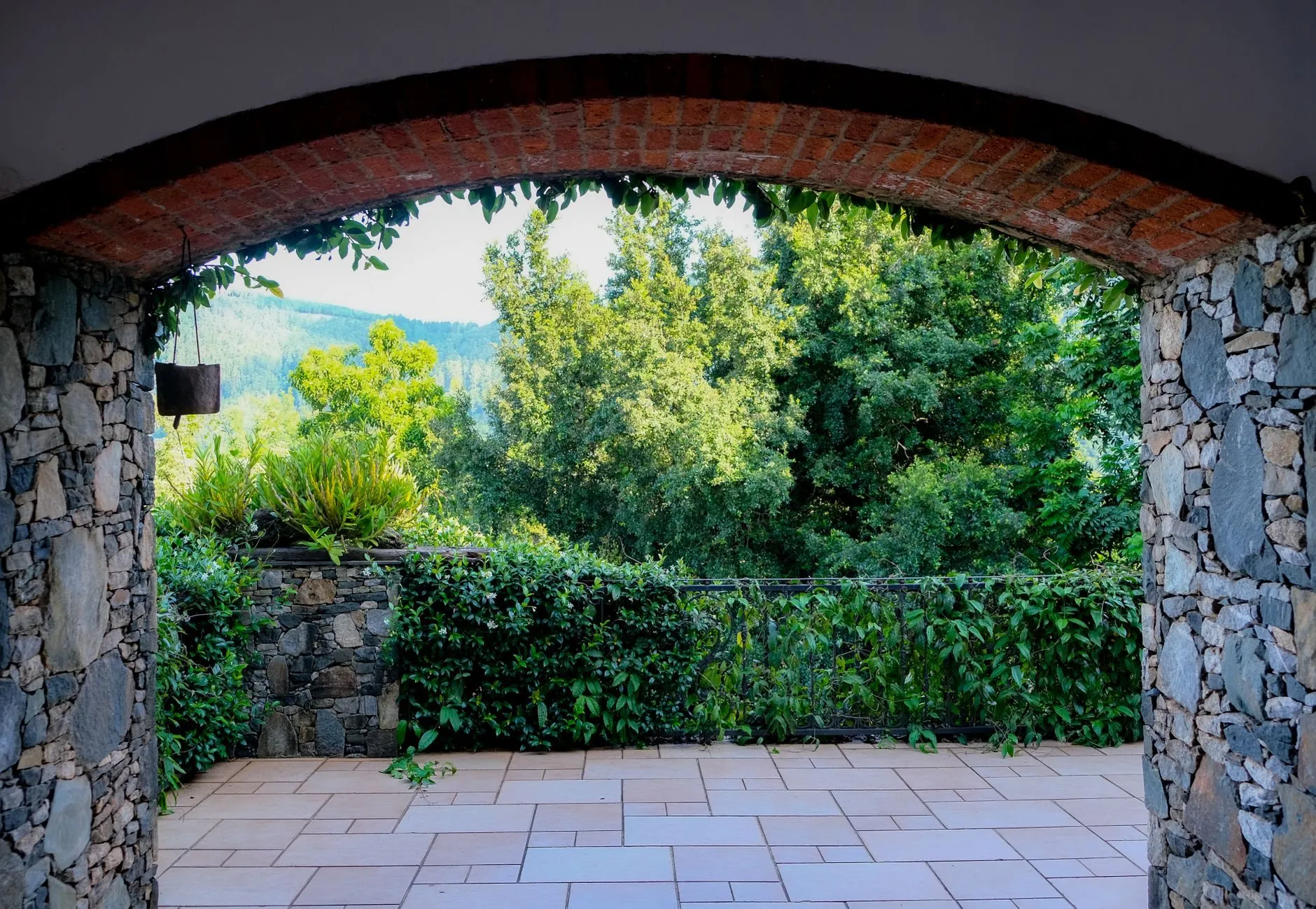
Sandstone, limestone and porcelain terraces laid on 150 mm of compacted sub-base, falls set away from the house, and a five-year guarantee on the lot.
- Excavation and muck-away
- 150 mm compacted MOT Type 1 sub-base
- Full mortar bed, not dot and dab
- Falls and drainage set to building regs
- Jointing, sealing and a clean handover
Time on site: 1 to 3 weeks on site
4.9 from 186 reviews · 5-year build guarantee
How we do it
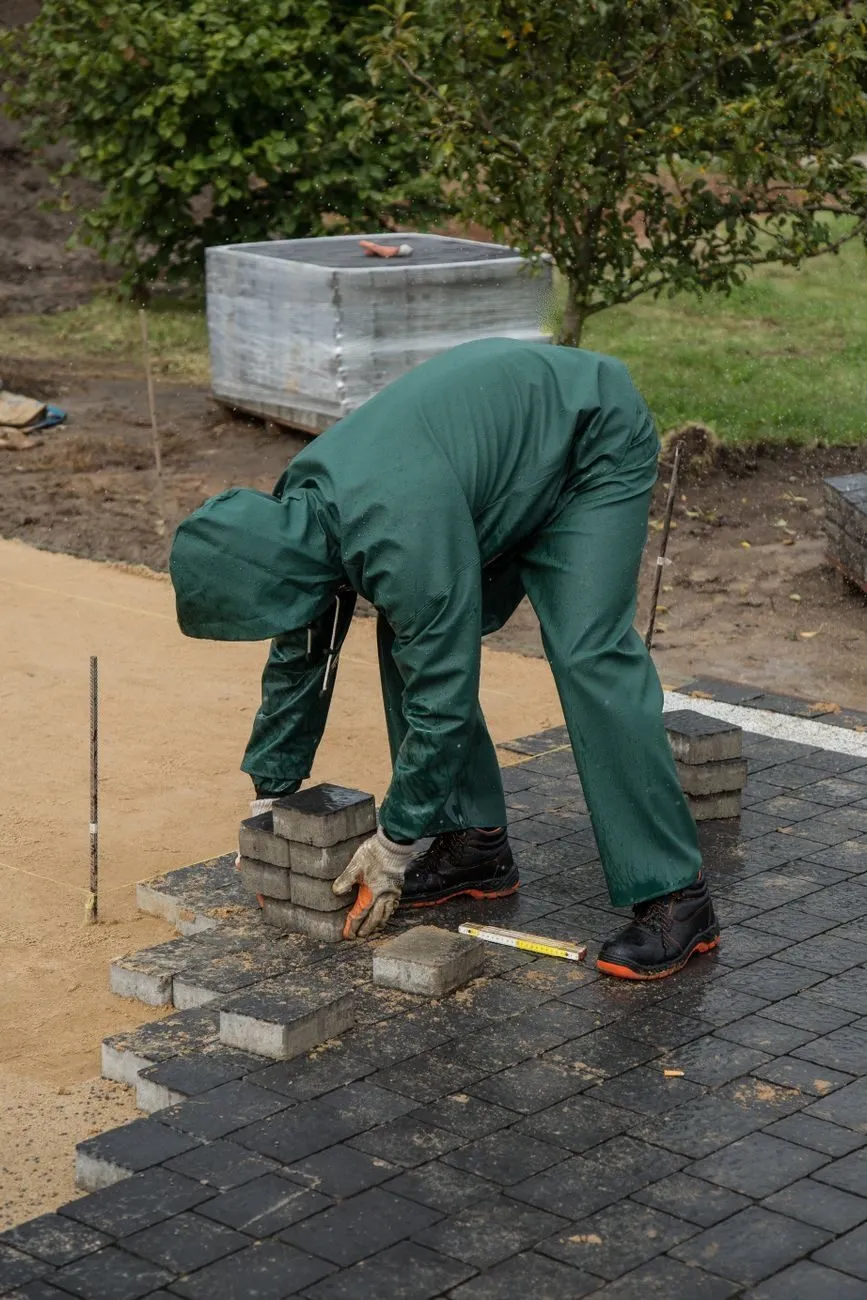
A patio is only as good as what is under it. Most of the call-outs we get to other firms’ work come down to the same thing: too little sub-base, a bed of mortar dots instead of a full bed, and no fall, so water sits by the back door.
Every terrace we lay is dug out to at least 200 mm, filled with 150 mm of compacted Type 1, and laid on a full wet mortar bed. We set a fall of 1 in 60 away from the house and route the water to a border, a linear drain or a soakaway. It is not glamorous, and it is the reason we can put a five-year guarantee on it.
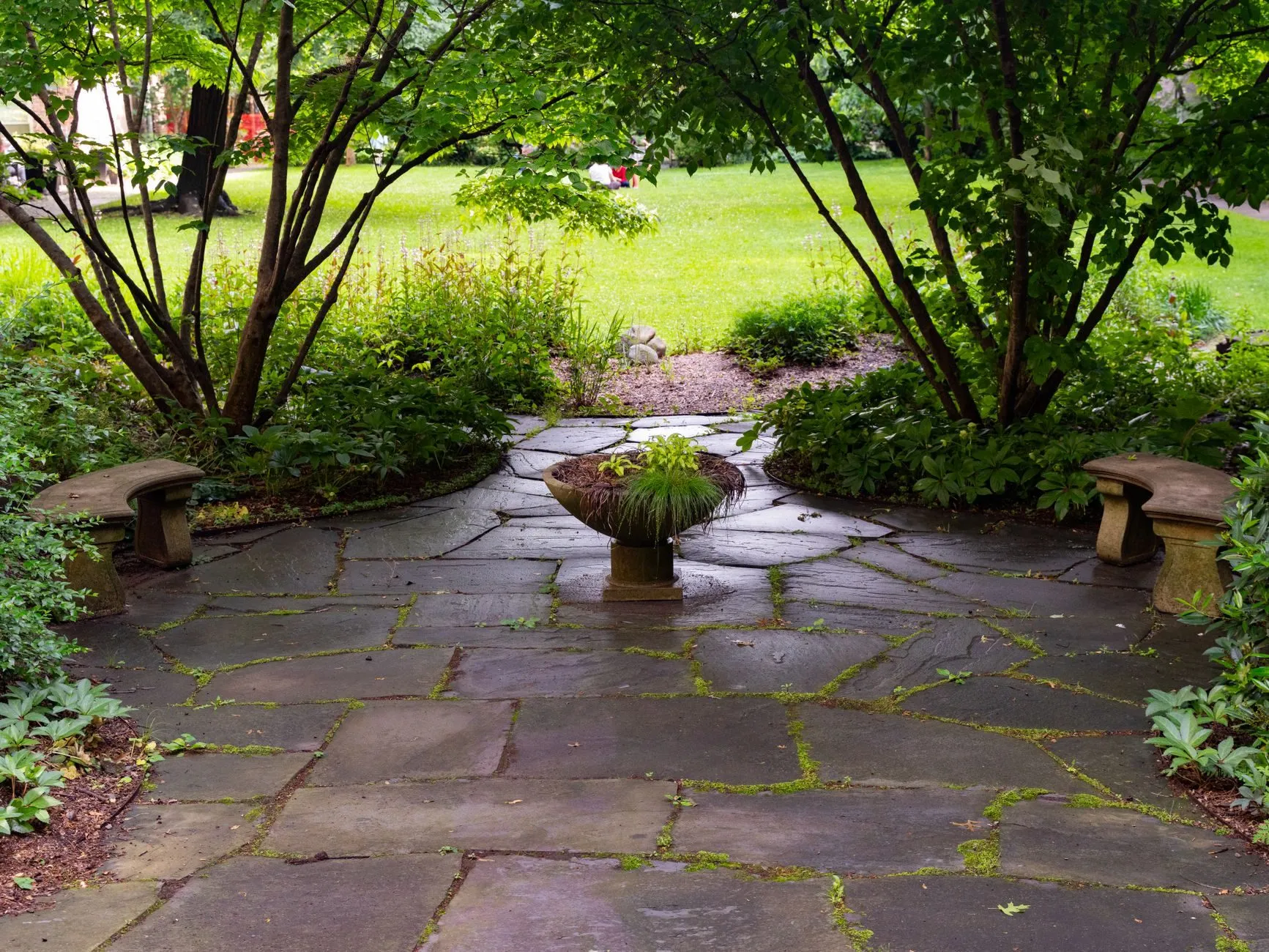
Above ground, we lay Indian sandstone, English limestone, porcelain and clay pavers, and we will happily work with reclaimed York stone if you have it. Prices start at £165 per m² for sandstone on a simple rectangular plan; curves, steps and cutting around trees push it towards £230.
Patios and paving: common questions
Which stone should I choose?
Indian sandstone is the best value and weathers well. Porcelain costs a little more to lay, never stains and suits modern houses. We bring samples to the garden visit.
Can you lay a patio in winter?
Yes, down to about 3°C and rising. Below that the mortar will not cure, so we stop and come back.